


SymplBrush Automatic Toothbrush | Adaptive Toothbrush for Adults
SymplBrush Automatic Toothbrush | Adaptive Toothbrush for Adults
Couldn't load pickup availability
♡ 10 % of this purchase funds home‑safety grants for older adults + enjoy our easy 30 day return policy!
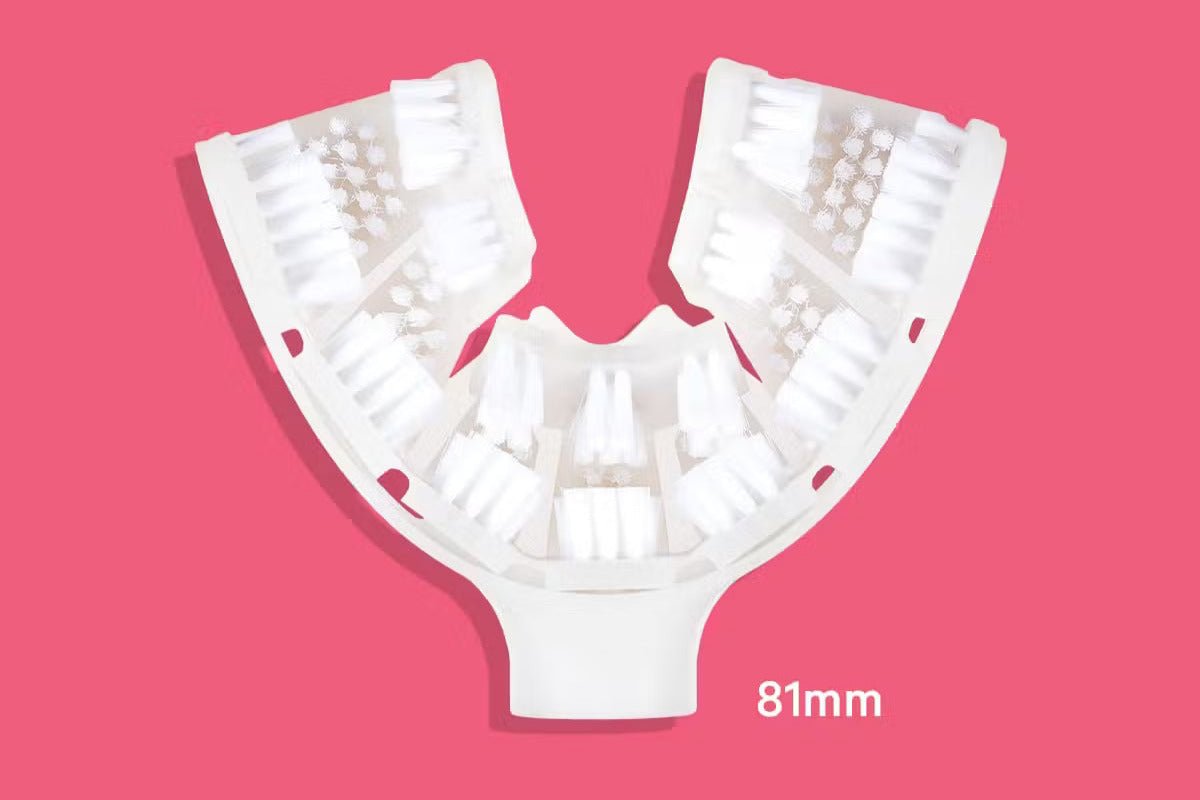
SymplBrush is an automatic toothbrush shaped like a mouthguard, so it cleans a whole arch at once instead of asking you to steer a small brush head around 32 teeth. Slide it in, press the button, and a flexible cradle holds roughly 20 toothbrushes worth of ultra soft nylon bristles against the teeth and gums while the motor runs nearly 900 strokes per minute. Guided mode does the thinking for you: 15 seconds on top, a pause, 15 seconds on the bottom, then it shuts off on its own. Manual mode keeps running as long as the button is held.
The Starter Kit arrives ready to use with the handpiece, two bristle sizes so you can find the right fit (76 mm small and 81 mm large, which together fit about 95 percent of adults), a magnetic charging stand, and a charging cord. A full charge takes about two hours and lasts two to three weeks of twice daily use. Bristles get replaced every three months, the same schedule your dentist recommends for any toothbrush, and you can set up replacement bristles on a standing three month delivery so fresh ones arrive right when it is time.
The device was tested in a six week blind study at the Forsyth Institute in Cambridge, Massachusetts, where twice daily use outperformed manual brushing both on gingivitis reduction and on the inflammatory markers associated with gum disease. That matters more than it first sounds. The National Institute of Dental and Craniofacial Research notes that gum disease is common and largely preventable through consistent daily plaque removal, and consistent plaque removal is exactly the step that breaks down first when brushing becomes physically hard.
Ideal for adults with arthritis, tremors, limited grip or shoulder reach, weakness on one side after a stroke, Parkinson's, or multiple sclerosis, and for caregivers walking someone with dementia through a routine that used to mean two long minutes of resistance. Pair it with our non slip gel pads to keep the charging stand steady on a wet counter. For children ages 5 to 12, see the SymplBrush Jr.
Specifications
Specifications
Frequently Asked Questions
Frequently Asked Questions
P65 Warning for Plastics
P65 Warning for Plastics
⚠ WARNING:This product can expose you to chemicals including ethylene, which is known to the State of California to cause cancer and/or reproductive harm. For more information go to www.P65Warnings.ca.gov


Why we know this works!
Why we know this works!
Get Help from an Occupational Therapist!
Find an Occupational Therapist →




Not sure what you need?
An occupational therapist can assess your situation and recommend exactly what will help. Tell us what you're dealing with and we'll connect you with the right OT.
Related Products
-
Tilt-Top Overbed Table | Hospital Bed Table for Home
Regular price $140.00Regular priceUnit price per -
Battery-Powered Patient Lift | Electric Hoyer Lift with Sling Included
Regular price $2,768.71Regular priceUnit price per -
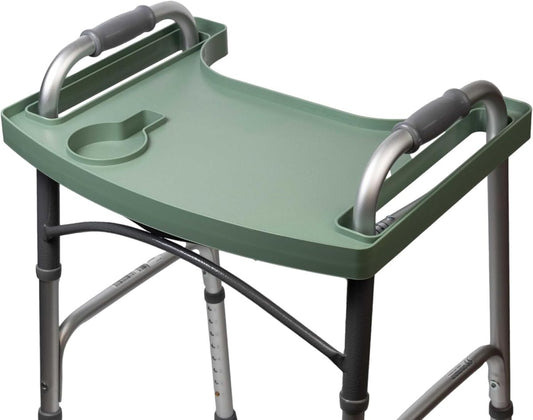
Walker Tray with Cup Holder | OT-Designed Tray for Folding Walkers
Regular price $39.99Regular priceUnit price per


Solve the whole puzzle! Get education, resources and services right here.
-

Free Resources
Access free educational resources, guides, and materials from AskSAMIE to learn about...
-

Community Supports
Not every solution is a product. This collection points to community programs...


Dive Deeper: a knowledge base of solutions for real caregiving questions
View all-

21 Easy DIY Wheelchair Costumes for Adults
Looking for some fun and creative costume ideas that will make your wheelchair a key part of your Halloween outfit? This guide brings together 21 easy DIY wheelchair costumes for adults. From...
21 Easy DIY Wheelchair Costumes for Adults
Looking for some fun and creative costume ideas that will make your wheelchair a key part of your Halloween outfit? This guide brings together 21 easy DIY wheelchair costumes for adults. From...
-

Improve Sleep for Seniors: Aging-in-Place Tips ...
Better sleep for older adults starts with three changes: a supportive sleep position, safer nighttime lighting, and a consistent wind-down routine. Here's what occupational therapy practitioners recommend for aging in...
Improve Sleep for Seniors: Aging-in-Place Tips ...
Better sleep for older adults starts with three changes: a supportive sleep position, safer nighttime lighting, and a consistent wind-down routine. Here's what occupational therapy practitioners recommend for aging in...
-

Adaptive Cooking Equipment: What You Need for Y...
The right adaptive cooking equipment makes cooking safer and more independent for older adults and people with arthritis, tremors, stroke, or memory loss. See which kitchen tools occupational therapy practitioners...
Adaptive Cooking Equipment: What You Need for Y...
The right adaptive cooking equipment makes cooking safer and more independent for older adults and people with arthritis, tremors, stroke, or memory loss. See which kitchen tools occupational therapy practitioners...


