Skip to product information
1 of 1

Picture Phone

Picture Phone

Regular price $92.00
Regular price Sale price $92.00
Sale Sold out
We accept cards and other payment options.
Shipping calculated at checkout.

♡ 10 % of this purchase funds home‑safety grants for older adults + enjoy our easy 30 day return policy!

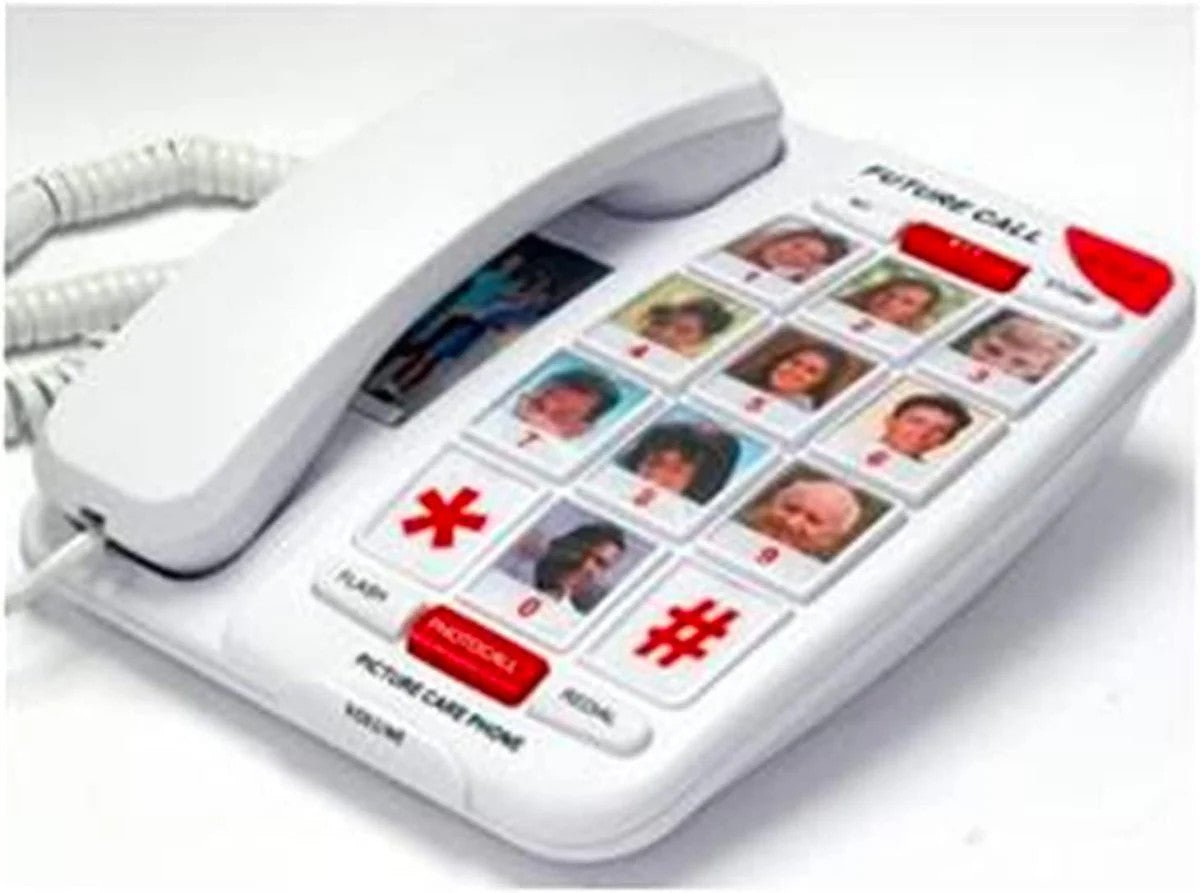
Up to 10 phone numbers can be saved with a picture of the person to dial. A press of the button will call the person in the picture which makes dialing easier for someone with low vision.

Specifications

Dialing: 10 picture memory buttons with one-touch or two-touch dialing
Speakerphone: 2-way speakerphone with 4-level volume control
Amplification: +40 dB volume gain (handset) and hearing-aid compatible
Visual Alerts: Red LED for incoming calls; green LED for in-use indicator
Emergency Dial: Dedicated 911 key with memory retained even when unplugged
Ringer: Adjustable Hi/Lo/Off switch
Mounting: Desk or wall mountable
Memory Backup: Stored numbers are retained without power
Controls: Handset volume control, redial/pause key, store key to prevent accidental changes

Dimensions: 9 × 7 × 3 inches (L × W × H)
Weight: 1.94 pounds
Color: White (standard)
Power: Line-powered (no batteries or external adapter required)

Frequently Asked Questions

Q: How does the Picture Phone work?

A: The Picture Phone works by allowing you to save up to 10 phone numbers, each paired with a photo of the person you want to call. Simply press the large picture button showing the person's photo, and the phone automatically dials their number—no need to remember phone numbers or navigate complex menus. The phone features one-touch or two-touch dialing, making it incredibly simple to stay connected with family, friends, caregivers, or emergency contacts. This visual, simplified approach eliminates the confusion of traditional keypads and makes calling easier for individuals with low vision, memory challenges, or cognitive impairments.

Q: Who should use a picture phone?

A: A picture phone is ideal for seniors with low vision or macular degeneration who struggle to see small phone buttons, individuals with Alzheimer's disease or dementia who have difficulty remembering phone numbers, people with cognitive impairments who find traditional phones confusing, anyone recovering from stroke or experiencing memory challenges, and elderly individuals who want a simpler, more intuitive way to stay connected with loved ones. It's also valuable for caregivers who want to ensure their clients or family members can easily reach them in case of need.

Q: How many contacts can you store on the Picture Phone?

A: The Picture Phone can store up to 10 phone numbers with corresponding pictures. Each of the 10 picture memory buttons can be programmed with a contact's phone number and paired with their photo, allowing you to create a personalized directory of your most important contacts—such as family members, friends, doctors, caregivers, or emergency services. The stored numbers are retained in memory even when the phone is unplugged, ensuring your contacts are never lost.

Q: Does the Picture Phone have amplification for hearing impaired users?

A: Yes, the Picture Phone features +40 dB volume gain in the handset, making it suitable for individuals with hearing loss. The phone also includes a 2-way speakerphone with 4-level volume control, allowing you to adjust sound levels for comfortable conversations. Additionally, the phone is hearing-aid compatible, ensuring clear communication for users who wear hearing aids. The handset volume control allows easy adjustment during calls to accommodate varying hearing needs.

Q: Does the picture phone have emergency calling features?

A: Yes, the Picture Phone includes a dedicated 911 emergency key that provides quick access to emergency services with a single press. Importantly, the 911 number is retained in memory even when the phone is unplugged, ensuring emergency calling capability is always available. This feature provides peace of mind for seniors living independently and their family members, knowing that help is just one button press away in case of an emergency.

Q: Can you see and hear when someone is calling on the Picture Phone?

A: Yes, the Picture Phone provides both visual and audible alerts for incoming calls. A red LED light flashes to indicate incoming calls, which is especially helpful for individuals with hearing impairments who may not hear the ringer. The phone also features an adjustable ringer with Hi/Lo/Off settings to customize sound levels. Additionally, a green LED serves as an in-use indicator, showing when the phone line is active. These multiple alert options ensure you won't miss important calls.

Q: Is the Picture Phone easy to set up and program?

A: Yes, the Picture Phone is designed for easy setup and programming. The phone is line-powered, meaning it requires no batteries or external adapters—simply plug it into your phone line and it's ready to use. Programming contacts involves using the store key to save phone numbers to each of the 10 picture buttons, then inserting photos of your contacts. The store key feature also prevents accidental changes once programmed, ensuring your contacts remain secure. The phone can be mounted on a desk or wall depending on your preference.

Q: What makes a picture phone better than a regular phone for seniors?

A: A picture phone is better than a regular phone for seniors because it eliminates the need to remember phone numbers, read small buttons, or navigate complex menus. The large, visual photo buttons make it immediately clear who you're calling, reducing errors, confusion, and anxiety. For individuals with low vision, the large picture buttons are much easier to see than tiny numbered keypads. For those with memory challenges or dementia, recognizing a loved one's face is far easier than recalling their phone number. This simplicity helps seniors maintain independence, stay connected with family and caregivers, and feel more confident using the phone.

P65 Warning for Plastics

⚠ WARNING:This product can expose you to chemicals including ethylene, which is known to the State of California to cause cancer and/or reproductive harm. For more information go to www.P65Warnings.ca.gov
View full details

Why we know this works!

We love this picture phone because as occupational therapy practitioners (OTPs) we see how losing the ability to dial can cut someone off from family faster than almost anything else. Can a person with dementia still use a phone? Often yes, when dialing is reduced to one press of a large button showing a familiar face. This phone stores up to 10 numbers behind photo buttons, keeps them saved even when unplugged, has a dedicated 911 key, and adds 40 decibels of hearing aid compatible volume for those with hearing loss. This is especially valuable for people with Alzheimer's disease or other dementias, stroke survivors, and anyone managing both low vision and hearing loss. A family member will need to program the numbers and photos, and it works on a landline connection; if your loved one can still dial and just needs bigger numbers, our Big Button Phone is the simpler option.

Not sure what you need?

An occupational therapist can assess your situation and recommend exactly what will help. Tell us what you're dealing with and we'll connect you with the right OT.

Get Matched with an OT

Related Products

1 of 3