


Nomo Smart Care | Elderly Monitoring System with Fall Detection
Nomo Smart Care | Elderly Monitoring System with Fall Detection
You want to know your mom is okay without calling her five times a day, and without putting a camera in her living room. Nomo Smart Care answers that with motion sensors instead of lenses: it learns her normal routine, shows you her day in an app, and alerts you when something is off.
How it works. The Essential Care Kit is three kinds of device working together. The Hub plugs in the main room, senses motion there, and provides hands free two way voice. Two Satellites plug into standard wall outlets in other rooms to extend coverage. Four Tags stick to anything that tells you a story, the medicine cabinet, the refrigerator, the front door, and register when that item is used. Tags are the only part rated for use near water, so one can go in the bathroom, and any Tag clips to the included lanyard to become a wearable fall detection pendant with a panic button.
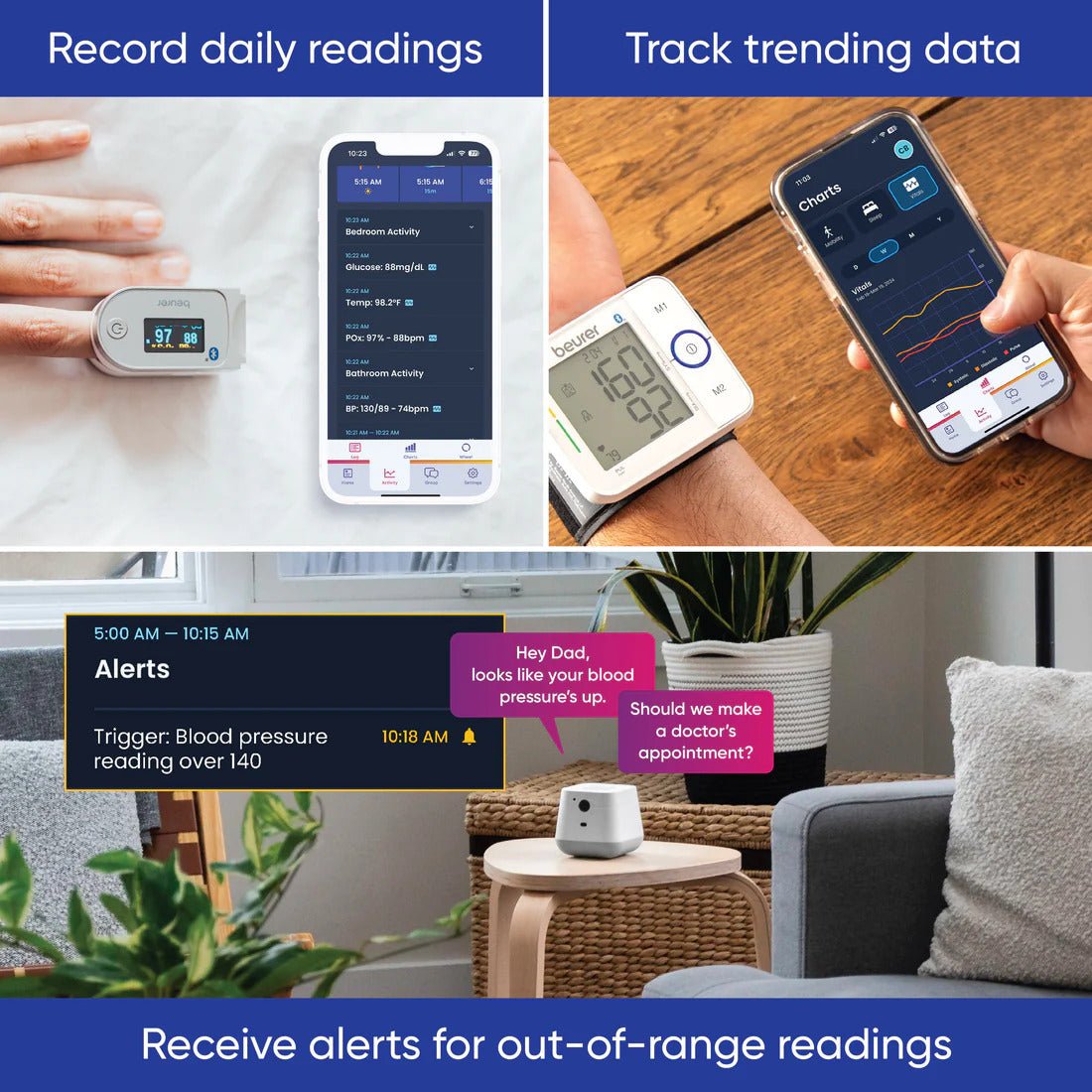
What you see. The app builds a daily activity checklist: did she get up at her usual time, did the medicine cabinet open, was there a bathroom trip at 3am, did she leave and come back. Anyone you invite to the Care Circle sees the same thing, so siblings stop relaying information through one exhausted person. The Hub and every Tag also carry an emergency button, and Nomo's monitoring partnership routes those to 24/7 emergency services when nobody in the family answers.
Practical details. The kit is a one time purchase and the insights require the Essential+ subscription, billed monthly or annually. Setup is app guided and takes most families under an hour; Nomo sells professional installation if you would rather not. The Hub needs 2.4GHz Wi-Fi in the home. The person being monitored needs no smartphone and never downloads anything.
Who it is ideal for. Aging adults living alone, people in the early and middle stages of dementia, adults with disabilities living semi independently, and anyone home from the hospital after surgery during those first shaky weeks. It suits families who are long distance, or local but stretched thin, and who care about preserving the dignity of the person being watched over.
An honest word on falls. The CDC reports that about one in four adults 65 and older falls each year, and falls remain the leading cause of injury death in that age group. Automatic fall detection helps, but no system on the market catches every fall, and all of them occasionally fire when nobody has fallen. Treat it as a strong safety net, not a guarantee. If a fall is your single biggest fear, also compare a dedicated button first system like our Around the Clock Medical Alarms.
For the wider picture of what technology can and cannot do for someone aging at home, read our guide to the best assistive technology for aging in place, or start with a home safety assessment for aging parents.
Order the Nomo Essential Care Kit or see the full Nomo Smart Care range.
Why we know this works
Why we know this works
Specifications
Specifications
Frequently Asked Questions
Frequently Asked Questions


Solve the whole puzzle! Get more education, resources & services
-

Free Resources
Access free educational resources, guides, and materials from AskSAMIE to learn about...
-

Community Supports
Not every solution is a product. This collection points to community programs...


Dive Deeper: A knowledge base of solutions for real caregiving questions
View all-

21 Easy DIY Wheelchair Costumes for Adults
Looking for some fun and creative costume ideas that will make your wheelchair a key part of your Halloween outfit? This guide brings together 21 easy DIY wheelchair costumes for adults. From...
21 Easy DIY Wheelchair Costumes for Adults
Looking for some fun and creative costume ideas that will make your wheelchair a key part of your Halloween outfit? This guide brings together 21 easy DIY wheelchair costumes for adults. From...
-

Improve Sleep for Seniors: Aging-in-Place Tips ...
Better sleep for older adults starts with three changes: a supportive sleep position, safer nighttime lighting, and a consistent wind-down routine. Here's what occupational therapy practitioners recommend for aging in...
Improve Sleep for Seniors: Aging-in-Place Tips ...
Better sleep for older adults starts with three changes: a supportive sleep position, safer nighttime lighting, and a consistent wind-down routine. Here's what occupational therapy practitioners recommend for aging in...
-

Adaptive Cooking Equipment: What You Need for Y...
The right adaptive cooking equipment makes cooking safer and more independent for older adults and people with arthritis, tremors, stroke, or memory loss. See which kitchen tools occupational therapy practitioners...
Adaptive Cooking Equipment: What You Need for Y...
The right adaptive cooking equipment makes cooking safer and more independent for older adults and people with arthritis, tremors, stroke, or memory loss. See which kitchen tools occupational therapy practitioners...


