
Find Online Support Groups | Caregiver Support
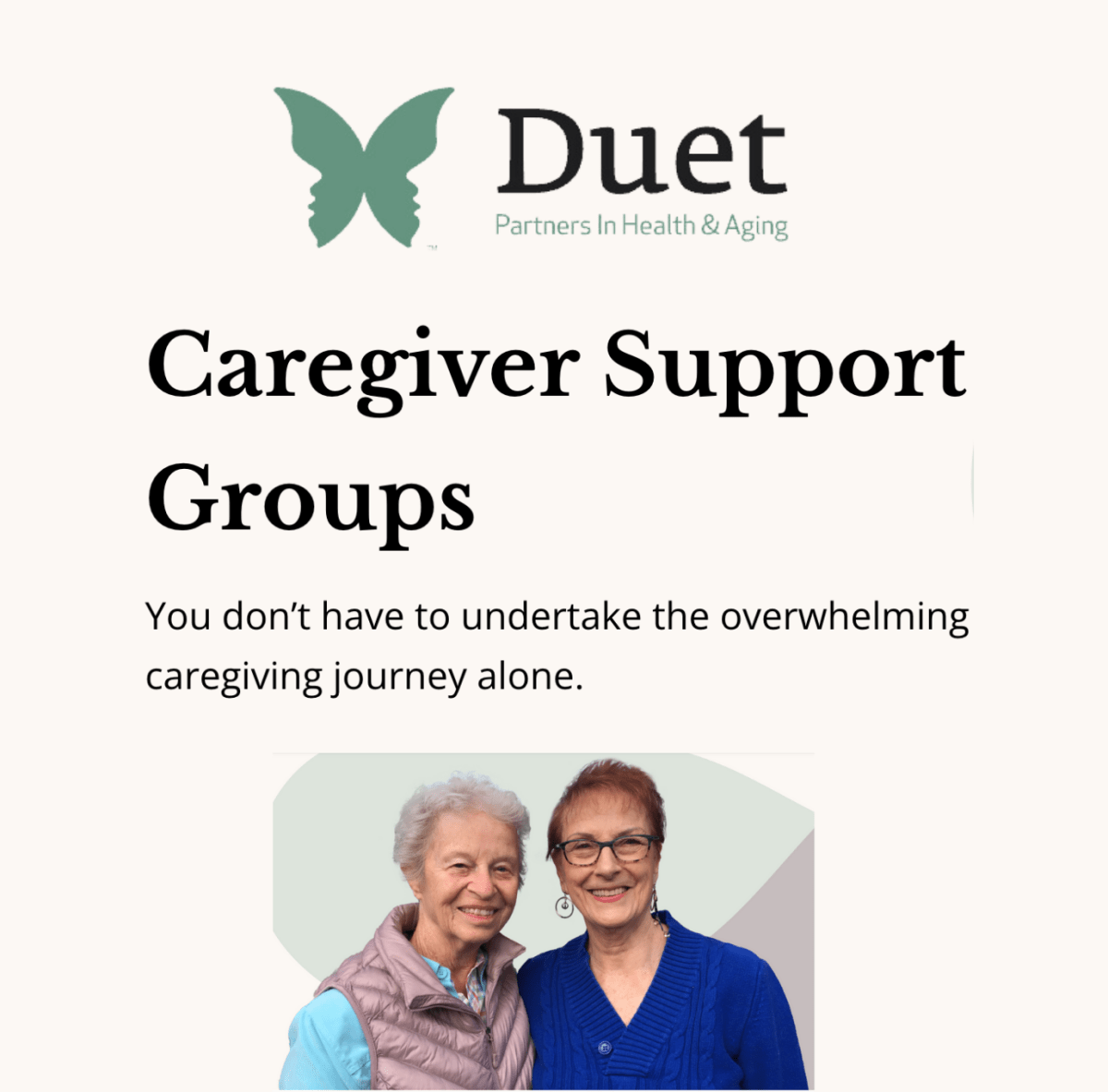
Are you caring for a loved one who requires round-the-clock attention? Is your own well-being suffering as you tend to the needs of one who needs you? Do you feel overwhelmed, resentful, or alone in your obligation? Duet: Partners In Health & Aging offers family caregivers support groups to help.
Attending a support group can make a difference. Discover you’re not alone as you share camaraderie with others who “get it.” You can express your frustrations in a safe space, without judgment. You will be guided to resources and learn coping strategies. Join our free support groups virtually!
Why we know this works
We love this resource because as occupational therapy practitioners (OTPs) we see caregiver burnout in our clients' homes as often as we see the conditions they are caring for. Do caregiver support groups actually help? Yes, because talking with people who truly get it lets you say the hard things out loud without judgment, and Duet: Partners In Health & Aging runs free virtual support groups where you will pick up coping strategies and resource leads while discovering you are not alone. The groups meet online, so you can join from home without arranging backup care. Click through to their website to find a group and register.
This is especially important for family caregivers who feel overwhelmed, resentful, or isolated while caring for someone with dementia, multiple sclerosis, or round-the-clock needs. If you want a structured skills program rather than peer support, use our Find a Dementia Care Program directory instead.
How to access this resource
Frequently Asked Questions
Q: How does the Find Online Support Groups | Caregiver Support work? The Find Online Support Groups connects family caregivers with free virtual support groups hosted by Duet: Partners In Health & Aging. Simply visit the website link to access information about joining these online support communities where you can share experiences with other caregivers who understand your challenges.
Q: Who can benefit from caregiver support groups? These support groups are designed for family caregivers who are caring for loved ones with conditions like Alzheimer's, dementia, multiple sclerosis, or anyone requiring round-the-clock attention. If you're feeling overwhelmed, resentful, or alone in your caregiving responsibilities, these groups can provide valuable support.
Q: Are the caregiver support groups really free? Yes, Duet: Partners In Health & Aging offers completely free virtual support groups for family caregivers. There are no hidden costs or fees to participate in these online support communities.
Q: What can I expect from joining an online caregiver support group? In these support groups, you'll discover you're not alone as you connect with others who "get it." You can express frustrations in a safe, judgment-free space, receive guidance to helpful resources, and learn practical coping strategies from experienced caregivers and facilitators.
Q: How do I access the virtual caregiver support groups? The support groups are conducted virtually, making them easily accessible from your home. Visit the Duet website through the provided link to find current group schedules and registration information for their online caregiver support sessions.
Q: What types of caregiving situations do these support groups address? The support groups help caregivers dealing with various conditions including Alzheimer's disease, dementia, multiple sclerosis, memory-related issues, and other situations requiring intensive caregiving. The groups focus on the emotional and practical challenges of family caregiving.
Q: Can caregiver support groups help with my own well-being? Absolutely. These support groups specifically address caregiver burnout and help you prioritize your own well-being while caring for others. You'll learn strategies to manage stress, prevent resentment, and maintain your mental health throughout your caregiving journey.
Q: How often do the online caregiver support groups meet? Visit the Duet: Partners In Health & Aging website for current schedules and meeting frequencies. The virtual format makes it easier to participate regularly, even with demanding caregiving responsibilities.
Share

Solve the whole puzzle! Get more education, resources & services
-
Caregiver Training Courses
Go to website for the full training library We've partnered with Higher...
-
Free Resources
Access free educational resources, guides, and materials from AskSAMIE to learn about...
-
Community Supports
Not every solution is a product. This collection points to community programs...
Dive Deeper: A knowledge base of solutions for real caregiving questions
View all-
Seniors Get Up Without Help: How to Prevent Fal...
Seniors often try to get up without help for practical reasons — not stubbornness. Here's how occupational therapists prevent falls with home setup, alarms, and empowering language that protects dignity....
Seniors Get Up Without Help: How to Prevent Fal...
Seniors often try to get up without help for practical reasons — not stubbornness. Here's how occupational therapists prevent falls with home setup, alarms, and empowering language that protects dignity....
-
Are Bed Rails Safe for Elderly? Risks & Options...
Bed rails can help prevent falls, but the wrong design can cause entrapment. Here's what the CPSC's 2023 ruling changed, how to use bed rails safely, and which OT-approved alternatives...
Are Bed Rails Safe for Elderly? Risks & Options...
Bed rails can help prevent falls, but the wrong design can cause entrapment. Here's what the CPSC's 2023 ruling changed, how to use bed rails safely, and which OT-approved alternatives...
-
Oral Hygiene Isn't Optional at Any Age
Oral hygiene affects everything from cavities to pneumonia to dementia risk, and it looks different at every age. Here is what a geriatric dentist and an OT want caregivers to...
Oral Hygiene Isn't Optional at Any Age
Oral hygiene affects everything from cavities to pneumonia to dementia risk, and it looks different at every age. Here is what a geriatric dentist and an OT want caregivers to...