
Video Training: Hoyer lifts
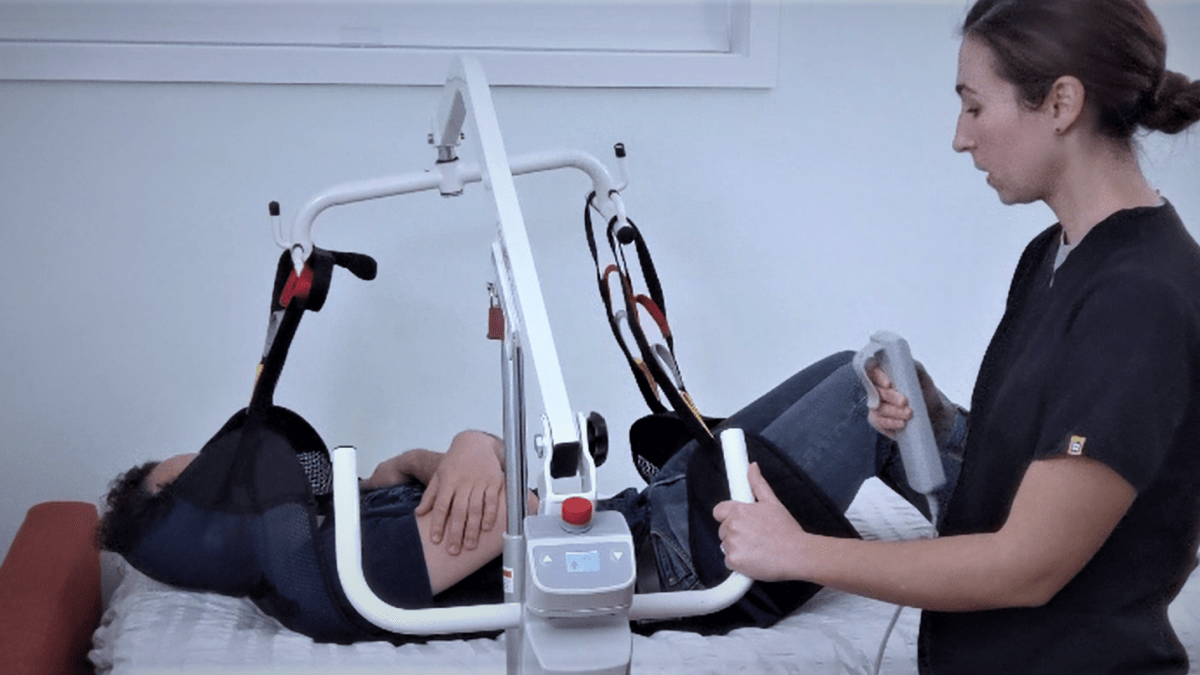
Learn about manual hydraulic and electric Hoyer lifts, their parts, how they work, and how to use them to safely and easily move the person you’re caring for in this 60 minute video course.
Higher Standards Caregiver Training has a catalog of over 30 specific and detailed training courses for family caregivers. With the ASKSAMIE coupon code you can get access to the entire catalog for 60 days for $19.99!
See the Advanced Family Caregiver Training University courses here!
Why we know this works
We love this course because as occupational therapy practitioners (OTPs) we see too many Hoyer lifts delivered to homes with no real training, then left unused in a corner while caregivers keep straining their backs. Can one person safely use a Hoyer lift at home? Yes, once you have been properly trained, and that is exactly what this 60 minute video provides: the parts of manual hydraulic and electric lifts, how each type works, and how to use them to move the person you are caring for safely and easily.
It is especially important for caregivers of people who cannot bear weight at all, including those with multiple sclerosis, other advanced neurological conditions, or a major surgical recovery. If your loved one can still stand partway with support, a full sling lift may be more than you need, and our Sit to Stand Lift for Home Use listing is worth a look first.
Specifications
Specifications
Duration: 1 hour
Frequently Asked Questions
Q: How does the Video Training: Hoyer lifts work?
This 60-minute video training course teaches you everything about manual hydraulic and electric Hoyer lifts. You'll learn about their parts, how they operate, and most importantly, how to use them safely to move the person you're caring for. The course is delivered online, so you can learn at your own pace from the comfort of your home.
Q: What will I learn in the Hoyer lift training course?
The comprehensive training covers manual hydraulic and electric Hoyer lifts, including identifying all parts and components, understanding how each type of lift works, proper setup and positioning techniques, safe transfer procedures, and troubleshooting common issues. This detailed course ensures you'll feel confident using Hoyer lifts safely and effectively.
Q: How much does the Hoyer lift training cost?
The regular price is $48.95, but with the exclusive ASKSAMIE coupon code, you get 75% off, bringing the cost down to just $12.24. This significant discount makes professional caregiver training accessible to families and caregivers who need it most.
Q: Who should take this Hoyer lift training course?
This training is perfect for family caregivers, home health aides, nursing assistants, and anyone responsible for safely moving someone with mobility challenges. Whether you're caring for someone with multiple sclerosis, recovering from surgery, or dealing with age-related mobility issues, this course provides essential skills for safe patient transfers.
Q: Is the Hoyer lift training course certified or accredited?
The course is provided by Higher Standards Caregiver Training, which specializes in professional caregiver education. While specific accreditation details aren't mentioned, the training follows industry best practices for safe patient handling and mobility equipment use.
Q: Can I access other caregiver training courses with my purchase?
Yes! Higher Standards Caregiver Training offers over 30 specific training courses for family caregivers. With the same ASKSAMIE coupon code, you can get access to their entire catalog for 60 days for just $19.99, making it an excellent value for comprehensive caregiver education.
Q: How long do I have to complete the Hoyer lift training?
The course is 60 minutes long and can be completed at your own pace. Since it's delivered online, you can pause, rewind, and review sections as needed to ensure you fully understand the safe operation of Hoyer lifts.
Q: What types of Hoyer lifts are covered in the training?
The training covers both manual hydraulic Hoyer lifts and electric Hoyer lifts, ensuring you understand the differences between these systems and how to safely operate each type. This comprehensive approach prepares you for various caregiving situations and equipment types you might encounter.
Share

Solve the whole puzzle! Get more education, resources & services
-
Caregiver Training Courses
Go to website for the full training library We've partnered with Higher...
-
Free Resources
Access free educational resources, guides, and materials from AskSAMIE to learn about...
-
Community Supports
Not every solution is a product. This collection points to community programs...
Dive Deeper: A knowledge base of solutions for real caregiving questions
View all-
Seniors Get Up Without Help: How to Prevent Fal...
Seniors often try to get up without help for practical reasons — not stubbornness. Here's how occupational therapists prevent falls with home setup, alarms, and empowering language that protects dignity....
Seniors Get Up Without Help: How to Prevent Fal...
Seniors often try to get up without help for practical reasons — not stubbornness. Here's how occupational therapists prevent falls with home setup, alarms, and empowering language that protects dignity....
-
Are Bed Rails Safe for Elderly? Risks & Options...
Bed rails can help prevent falls, but the wrong design can cause entrapment. Here's what the CPSC's 2023 ruling changed, how to use bed rails safely, and which OT-approved alternatives...
Are Bed Rails Safe for Elderly? Risks & Options...
Bed rails can help prevent falls, but the wrong design can cause entrapment. Here's what the CPSC's 2023 ruling changed, how to use bed rails safely, and which OT-approved alternatives...
-
Oral Hygiene Isn't Optional at Any Age
Oral hygiene affects everything from cavities to pneumonia to dementia risk, and it looks different at every age. Here is what a geriatric dentist and an OT want caregivers to...
Oral Hygiene Isn't Optional at Any Age
Oral hygiene affects everything from cavities to pneumonia to dementia risk, and it looks different at every age. Here is what a geriatric dentist and an OT want caregivers to...